
Get Fresh Cocktail Recipes in Your Inbox
Join our newsletter and receive exclusive cocktail recipes, tips & mixology secrets every week.
No spam, just good taste. Unsubscribe anytime.
 ByJames
Walk into any serious cocktail bar and you’ll see bartenders reaching for the same tool: a sleek two-piece shaker that seals with a confident tap and opens just as smoothly. That’s the Boston shaker, the workhorse of professional bartending. It’s simpler than it looks, more versatile than you’d think, and once you get the hang of it, you’ll understand why it’s the industry standard.
A Boston shaker is a two-piece cocktail shaker made of a large metal tin and a smaller tin or mixing glass. Unlike the three-piece Cobbler shaker with its built-in strainer and cap, the Boston keeps things minimal. You get two vessels that fit together to create a seal, nothing more.
The standard setup uses a 28-ounce large tin and either an 18-ounce small tin or a 16-ounce pint glass. The catch? There’s no built-in strainer. You’ll need a separate Hawthorne strainer to pour your cocktail cleanly into a glass.
This stripped-down design is exactly why bartenders love it. Fewer parts means faster prep, easier cleaning, and less that can go wrong during a busy shift.
The traditional Boston shaker pairs a metal tin with a mixing glass. The glass lets you see your ingredients as you build the cocktail, which helps with layering and proportions. It also looks elegant behind a home bar.
But most modern bartenders have switched to tin on tin, two stainless steel vessels that nest together. Metal chills faster than glass, creates a tighter seal, and won’t shatter if you drop it mid-service. The all-metal setup is more forgiving and more durable.
You’ll also see weighted tins, where the base of the large tin has added heft. The extra weight improves balance in your hand and helps the cocktail chill faster. Some bartenders swear by them, others prefer unweighted for a lighter feel. It comes down to personal preference and what feels right when you shake.
Speed matters when you’re making drinks for a packed bar. The Boston shaker lets you work fast because there’s no cap to unscrew and no parts that freeze shut when ice-cold liquid hits metal threads. You tap, you shake, you break the seal, you strain. Done.
The larger capacity gives ice more room to move, which means better aeration and dilution. Cocktails like Whiskey Sours or Daiquiris benefit from that aggressive agitation. The drink chills quickly and develops a silky texture that smaller shakers can’t match.
Durability is another factor. An all-metal Boston shaker can take years of nightly use without showing wear. No plastic threads to strip, no caps to lose, no seals to replace. You clean it, dry it, and it’s ready for the next round.
And because it’s just two simple pieces, cleaning takes seconds. Rinse, wash, dry. No hidden crevices where sticky syrup hides. No fiddly parts that need hand-washing.
Using a Boston shaker feels awkward the first few times, then becomes second nature. Here’s the process.
Add your ingredients and ice to the smaller tin or glass. Don’t overfill. Leave about an inch of space at the top so the contents have room to move when you shake.
Create the seal by placing the large tin over the small one at a slight angle. Press down and give it a firm tap with the heel of your hand. You’ll feel it lock into place. The vacuum seal should be snug but not impossible to break later.
Grip both tins with one hand at the base of each piece. Your thumbs or bottom two fingers should secure the connection point. This prevents the tins from flying apart if the seal breaks mid-shake.
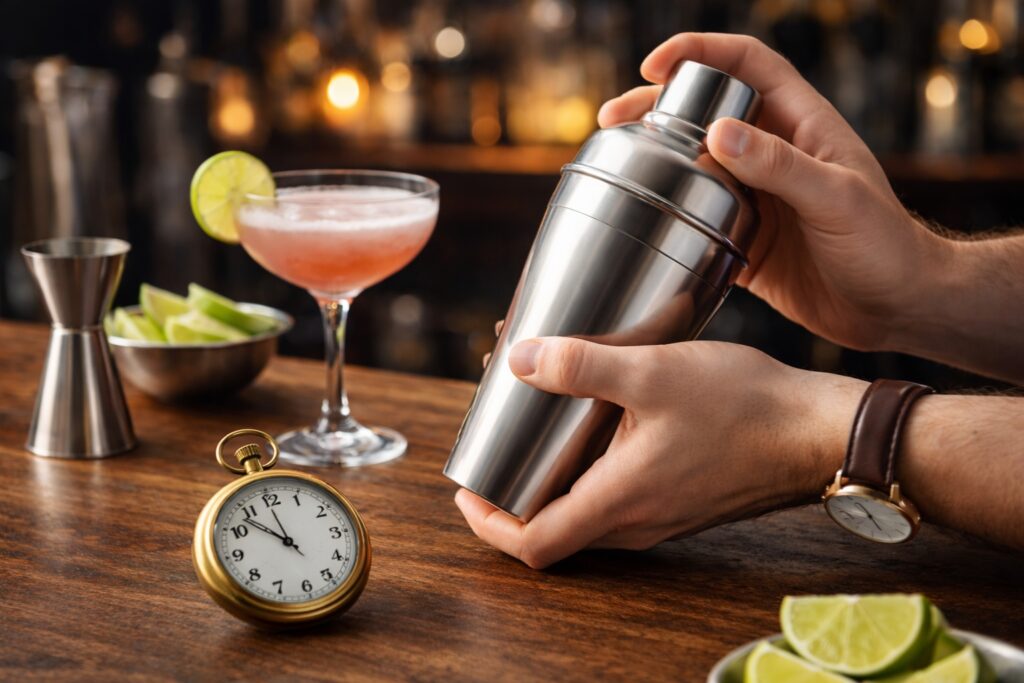
Shake for 10 to 15 seconds, holding the shaker parallel to the floor or angled slightly downward. Shake hard. The goal is to chill the drink and integrate the ingredients, not to give it a gentle rocking motion. Always face away from guests in case anything goes wrong.
Break the seal by holding the shaker with one hand and giving the side of the large tin a firm smack with your other palm. You’ll hear a pop as air rushes in. If that doesn’t work, try squeezing the large tin just above the seal line and pulling the pieces apart.
Strain immediately by placing a Hawthorne strainer over the large tin and pouring into your glass. The spring on the strainer catches ice and large particles while letting the liquid through.
The Cobbler shaker is the three-piece design you probably picture when someone says cocktail shaker. It has a metal base, a built-in strainer, and a cap that doubles as a jigger. It’s beginner-friendly because everything you need is in one tool.
The Boston shaker requires a separate strainer and a bit more technique, but it outperforms the Cobbler in almost every other way. It’s faster to use, easier to clean, less prone to getting stuck, and holds more liquid.
For professional bartenders, the Boston is the default. Speed and reliability matter too much to fumble with a Cobbler’s cap during a rush.
For home bartenders, the Boston makes sense if you’re serious about cocktails. Yes, there’s a learning curve. But it’s about ten minutes of practice, not days of training. Once you’ve made five or six drinks, the motions feel natural.
The Cobbler works fine if you shake one Margarita every few weeks and want simplicity above all else. But if you’re mixing drinks regularly or want to develop real technique, the Boston shaker is worth the small adjustment.
Choose a Boston shaker if you want the same tool professionals use every night. It’s built for speed, durability, and consistent results. The technique takes a few tries to nail, but once you’ve got it, you’ll appreciate how much faster and smoother the process becomes.
Skip it if you only make cocktails occasionally and prefer absolute simplicity. The Cobbler shaker is easier to pick up and use without thinking. You’ll sacrifice some performance, but for casual use, it gets the job done.
If you’re on the fence, go with tin on tin over glass and tin. It’s more forgiving, more durable, and preferred by most working bartenders. Pair it with a quality Hawthorne strainer and you’ve got a setup that will last years without needing replacement.