
Get Fresh Cocktail Recipes in Your Inbox
Join our newsletter and receive exclusive cocktail recipes, tips & mixology secrets every week.
No spam, just good taste. Unsubscribe anytime.
 ByJames
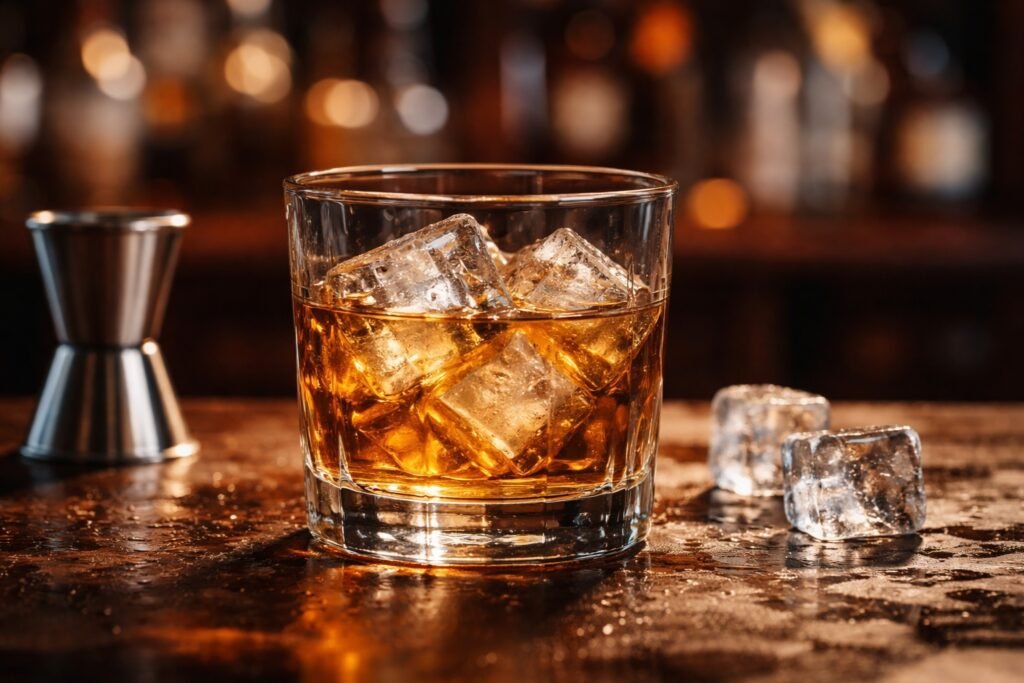
Yes, bourbon whisky and bourbon are exactly the same thing. The terms are interchangeable. The confusion usually comes from the spelling variation between “whiskey” and “whisky,” but when it comes to bourbon, both spellings refer to the same American spirit made primarily from corn. Whether you see it written as bourbon whisky or bourbon whiskey on a bottle, you’re getting the identical product.
The spelling difference has nothing to do with what’s in the bottle. It’s purely a matter of tradition and geography.
Whiskey (with an ‘e’) is the preferred spelling in the United States and Ireland. Most American distilleries default to this version when labeling their products.
Whisky (no ‘e’) is the standard in Scotland, Canada, and Japan. Scottish single malts and Canadian whiskies always drop the ‘e’.
Here’s the thing: bourbon producers can choose either spelling. Some brands use “bourbon whisky” on their labels, others go with “bourbon whiskey.” The choice is purely stylistic, often tied to brand identity or the distillery’s heritage. Both are correct. Both mean the same spirit.
The spelling doesn’t define bourbon. A strict set of legal requirements does.
To be called bourbon, the spirit must meet these conditions: at least 51% corn in the grain mixture, aged in new charred oak barrels, produced in the United States, containing no additives except water, and distilled at no more than 160 proof.
These rules are federal law. Every bourbon, whether spelled with or without the ‘e’, follows them. That’s what makes bourbon bourbon, not the letters on the label.
The 51% corn requirement gives bourbon its signature sweetness. The remaining grain bill typically includes rye, wheat, or malted barley, which shapes the flavor profile. But corn is always the star.
New charred oak barrels are mandatory. Unlike Scotch or Irish whiskey, which often age in used barrels, bourbon must use fresh wood. This gives the spirit its caramel and vanilla notes, along with that deep amber color.
Think of it as a hierarchy. Whiskey is the broad category covering any spirit distilled from fermented grains. Bourbon is a specific type of whiskey with strict production rules.
All bourbon is whiskey. Not all whiskey is bourbon.
It’s similar to how all Champagne is sparkling wine, but not all sparkling wine is Champagne. Or how all tequila comes from agave, but not all agave spirits qualify as tequila. Bourbon earned its place as a protected category through those legal requirements.
Other whiskeys can be made from different grains (like rye or barley), aged in used barrels, or produced outside the U.S. Bourbon can’t do any of that and still carry the name.
Not even a little.
If you see “bourbon whisky” on one shelf and “bourbon whiskey” on another, the difference is cosmetic. What’s inside the bottle follows the same rules. The liquid tastes the way it does because of the grain, the barrels, and the distiller’s choices, not the spelling.
Maker’s Mark, for example, uses “whisky” on their labels. Jim Beam tends toward “bourbon” without specifying whiskey or whisky. Woodford Reserve goes with “bourbon whiskey.” All three are legitimate bourbons. The spelling reflects brand preference, nothing more.
When you’re ordering at a bar or talking about bourbon with friends, use whichever version feels natural. Nobody’s keeping score. The bartender will pour you the same drink either way.
Technically, yes, but the difference is narrow.
Kentucky bourbon must be both distilled and aged in Kentucky. Regular bourbon can be made anywhere in the United States, as long as it follows the federal requirements.
That said, around 95% of bourbon comes from Kentucky anyway. The state has the climate, the water, and the distilling tradition that made bourbon what it is. The name “bourbon” itself comes from Bourbon County, Kentucky.
Quality isn’t determined by whether it says “Kentucky” on the label. Plenty of excellent bourbons are made in Kentucky without using that designation. Focus on the distillery, the age statement, and the flavor profile instead.
Tennessee whiskey occupies a gray area. It meets all the requirements to be bourbon, but it goes through one additional step: the Lincoln County Process, where the whiskey is filtered through charcoal before aging.
Because of this extra filtration, Tennessee whiskey is legally classified as its own category, separate from bourbon. Jack Daniel’s is the most famous example. It’s technically not bourbon, even though the production process is nearly identical.
If you’re splitting hairs, Tennessee whiskey is bourbon’s close cousin. If you’re ordering a drink, the difference matters less than your personal taste.
Keep it simple. Just say bourbon. That’s the clearest, most widely understood term.
If you want to be more specific, “bourbon whiskey” works perfectly. So does “bourbon whisky.” All three versions communicate the same thing.
Don’t overthink the spelling. It’s not a test. The people who care about the ‘e’ are either distillers with strong brand opinions or whiskey nerds who enjoy debating minutiae. For everyone else, the name is just a way to identify what you want to drink.
Focus on what actually matters: the brand, the age, the mash bill, and whether you like the taste. A four year old bourbon tastes different from a ten year old. A high rye mash bill brings spice. A wheated bourbon leans sweeter and softer.
Those details shape your drinking experience. The spelling doesn’t.
When you walk into a bar and ask for bourbon, you’re getting an American whiskey made primarily from corn, aged in new charred oak, with no additives. That’s true whether the bottle says whisky, whiskey, or just bourbon. The rest is semantics.