
Get Fresh Cocktail Recipes in Your Inbox
Join our newsletter and receive exclusive cocktail recipes, tips & mixology secrets every week.
No spam, just good taste. Unsubscribe anytime.
 ByJames
Tequila deserves better than being shoved in the back of a cabinet between the vodka and rum. This spirit has range—from crisp margaritas to smoky Oaxaca Old Fashioneds—and organizing your home bar around tequila cocktails changes everything. When your setup makes sense, mixing a Paloma or a Tommy’s Margarita becomes effortless instead of a scavenger hunt. Here’s how to build a tequila-focused bar that actually works.
Not all tequila works the same way in cocktails. Blanco (unaged) brings clean agave flavor perfect for citrus-forward drinks like margaritas. Reposado (aged 2 to 12 months) adds subtle oak notes that balance spicy or herbaceous cocktails. Añejo (aged over a year) works best in spirit-forward drinks or sipped neat.
You need at least one bottle from each category if you’re serious about tequila cocktails. Each type handles different flavor profiles, and trying to substitute one for another changes the drink completely.
Start with two bottles: one quality blanco for your everyday margaritas and Palomas, plus one reposado for when you want more complexity. That covers 90% of classic tequila cocktails.
Intermediate setups add a third bottle—either a second blanco (one for mixing, one premium for sipping) or an añejo for Old Fashioned variations. Enthusiasts eventually collect 5+ bottles, including cristalino, extra añejo, or regional expressions.
Quality beats quantity with tequila. One excellent 100% agave blanco outperforms three mediocre mixtos every time.
Your most-reached-for blanco goes front and center, within arm’s reach of your mixing zone. Reposado sits beside it. Añejos and special bottles belong in the back row or on a higher shelf since you use them less frequently.
Group bottles by age category, not by price or brand. This makes grabbing the right type instinctive when you’re mid-recipe. Alphabetical organization looks neat but slows you down when mixing.
Orange liqueur sits at the heart of most tequila cocktails. Cointreau, triple sec, or a quality Curaçao—pick one and keep it stocked. This modifier appears in margaritas, Cadillacs, and dozens of variations.
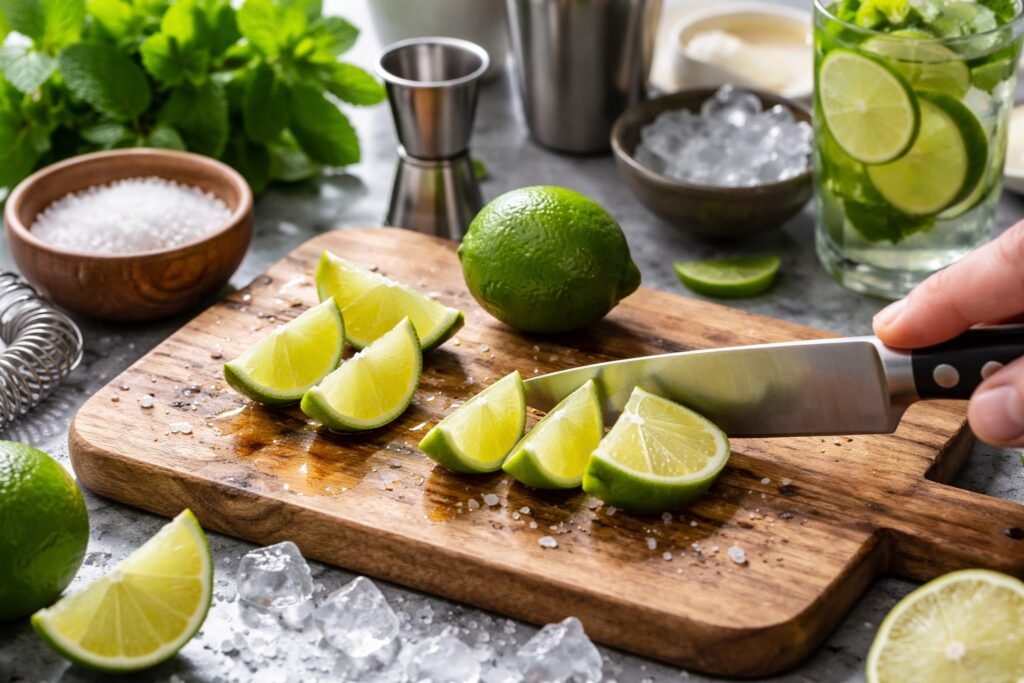
Fresh lime juice matters more than the tequila itself in many drinks. Bottled juice ruins cocktails. Keep 8 to 10 limes on hand and a citrus press within reach.
Agave syrup or simple syrup rounds out the trinity. Agave nectar matches tequila’s flavor profile naturally, but simple syrup works if that’s what you have. Make it yourself or buy it—just keep it ready.
These three ingredients account for the majority of tequila cocktail recipes. Everything else is optional.
Mezcal expands your repertoire into smoky territory. Even one bottle opens up Oaxaca Old Fashioneds, Mezcal Margaritas, and Naked and Famous cocktails. Store it next to your tequila.
Coffee liqueur enables Café de Olla cocktails and adds depth to winter serves. Grapefruit soda (Jarritos, Squirt, or similar) turns any tequila into an instant Paloma. Jalapeño-infused tequila or hot sauce brings heat to spicy margaritas.
These additions stay secondary until you’ve mastered the basics. Add them as your skills and curiosity grow.
Frequently used modifiers—orange liqueur, agave syrup—live directly beside your tequila bottles. Specialty bottles like coffee liqueur can sit further away since you use them occasionally.
Orange liqueur stays at room temperature. Agave syrup goes in the fridge after opening. Grapefruit soda needs refrigeration. Know what requires cold storage and what doesn’t.
Limes drive tequila cocktails. Keep a minimum of 8 to 10 fresh limes available. Store them in a bowl on the counter if you’ll use them within 3 to 4 days, or refrigerate them for longer shelf life.
Add lemons and grapefruit if you make Palomas or citrus variations regularly. Otherwise, skip them.
Position your citrus press or juicer next to your mixing area. Squeezing limes mid-cocktail should take seconds, not require digging through drawers. A handheld press works fine for home use.
Salt rims define margaritas. Keep coarse salt for rimming in a small, wide dish. Fine salt works but coarse creates better texture. Flavored salts (Tajín, smoked salt) add personality to drinks.
Set up small plates or shallow bowls specifically for rimming glasses. Running a lime wedge around the glass rim, then dipping it in salt becomes second nature when your station is organized.
Fresh herbs matter for specific drinks. Mint transforms Palomas. Cilantro works in savory tequila cocktails. Store these in the fridge with stems in water.
Jalapeños, cucumber, and other fresh garnishes stay refrigerated until needed. Don’t leave them out—they wilt fast.
A cocktail shaker (Boston or cobbler style) handles margaritas and anything citrus-based. Pick whichever feels comfortable in your hands. Both work.
A jigger ensures accurate measurements. Tequila cocktails rely on precise ratios—too much lime juice or too little agave syrup throws the balance off. Eyeballing measurements leads to inconsistent drinks.
Your citrus press doubles as a tool and time-saver. Hand-squeezing limes takes forever. A good press gets more juice with less effort.
A bar spoon stirs spirit-forward drinks like Tequila Old Fashioneds. A Hawthorne strainer or fine mesh strainer keeps ice and pulp out of the finished cocktail.
A muddler crushes fresh ingredients like jalapeños, herbs, or fruit. Essential for drinks that need fresh flavor released directly into the glass.
A channel knife or peeler cuts citrus twists for garnishing. A microplane zests citrus for salt rim preparation or adds aromatic oils to drinks.
Small bowls for salt and sugar rims prevent cross-contamination and keep your prep area clean.
Store tools in a drawer, caddy, or countertop holder. Keeping everything in one designated spot means you’re not searching for the jigger while ice melts in your shaker.
Most-used tools—shaker, jigger, strainer—stay closest to your mixing zone. Specialty tools like the muddler or channel knife can sit slightly further away.
Clean tools immediately after use. Sticky residue from agave syrup or lime juice hardens quickly.
Rocks glasses handle tequila Old Fashioneds, on-the-rocks pours, and Tommy’s Margaritas served over ice. You need at least 4 of these.
Margarita or coupe glasses work for up cocktails—margaritas served straight up without ice. Coupe glasses look elegant and work across multiple cocktail types.
Highball glasses serve Palomas, Tequila Sunrises, and tall mixed drinks. Stock 4 to 6 of these.
Shot glasses aren’t just for shots. Use them to taste tequila neat or measure small pours. Two or three suffice.
For home use, 4 rocks glasses, 4 coupes or margarita glasses, and 4 to 6 highballs cover most situations. You can always wash mid-party if needed.
Store glassware on open shelves for easy access or in a cabinet if you prefer a clean look. Hanging racks work for stemware but take up vertical space.
Dust accumulates on open shelves. Rinse glasses before use if they’ve been sitting.
Clear counter space makes or breaks your cocktail workflow. You need room to shake, stir, strain, and garnish without moving bottles around constantly.
Position your mixing zone near the sink. Rinsing tools, dumping ice, and grabbing water all happen faster when the sink is within reach.
Designate a landing spot for finished drinks. This prevents glasses from sitting in your workspace while you prep the next round.
Zone 1 holds spirits and base bottles—your tequilas, mezcal, and orange liqueur. This is your primary reach zone.
Zone 2 contains tools and glassware. Shaker, jigger, strainer, and glasses live here.
Zone 3 manages fresh ingredients and garnishes. Limes, salt, herbs, and anything refrigerated belong in this area or directly next to it.
Adapt this system to your space. Bar carts, cabinets, or countertop setups all work with the same logic—keep related items grouped and frequently used items accessible.
Ice storage matters. Keep ice in a bucket or insulated container near your mixing zone, not across the kitchen.
Large cubes work for rocks glasses and slow dilution. Crushed ice chills drinks faster and works for certain cocktails. Know which style your drinks need.
Never scoop ice directly from your mixing area. Use a dedicated scoop and keep it clean.
The top shelf carries your most-used tequila, orange liqueur, and essential tools. Everything you grab constantly goes here.
The middle shelf holds modifiers, backup glassware, and less-frequent bottles like mezcal or coffee liqueur.
The bottom shelf stores backup bottles, larger items, or decorative elements. Heavy bottles belong here for stability.
Bar carts work because they’re mobile. Roll it out when mixing, tuck it away when done.
Tiered organizers or risers create visibility in cabinets. You see every bottle without moving things around.
Group by category—tequilas together, modifiers together, tools together. Alphabetical organization wastes time when you’re thinking in terms of drink components, not brand names.
Clear containers or labels help if multiple people use the bar. Otherwise, visual organization works fine.
Minimal footprint setups use a tray or caddy to corral bottles and tools. Everything stays contained but accessible.
Keep your go-to blanco, orange liqueur, jigger, and shaker on the tray. Store everything else in a nearby cabinet.
This approach works for small kitchens where permanent bar space isn’t realistic. The tray comes out when needed, disappears when not.
Fresh lime supply runs out faster than you expect. Restock before you’re down to one lime.
Ice levels matter if you entertain regularly. Running out mid-party kills momentum.
Most-used bottles (your everyday blanco, orange liqueur) need monitoring. Buy replacements before they’re empty, not after.
Rotate bottles by usage. Move rarely used spirits to the back so frequently used ones stay accessible.
Clean glassware and tools thoroughly. Sticky residue builds up over time, especially on jiggers and shakers.
Refresh garnishes. Toss wilted herbs, dried-out limes, or anything past its prime. Stale ingredients ruin fresh cocktails.
Summer means more Palomas—keep grapefruit soda stocked. Winter shifts toward coffee liqueur and warmer, spirit-forward serves.
Your drinking patterns change with the seasons. Adjust your setup accordingly instead of maintaining the same inventory year-round.
Track what you actually make versus what you think you’ll make. Organization based on reality beats organization based on aspiration.
Organization transforms tequila cocktails from a hassle into something you actually want to do. Start with the basics, build as you go, and adjust the system until it fits your space and habits. The goal isn’t perfection—it’s easy access to great drinks whenever the mood strikes.