
Get Fresh Cocktail Recipes in Your Inbox
Join our newsletter and receive exclusive cocktail recipes, tips & mixology secrets every week.
No spam, just good taste. Unsubscribe anytime.
 ByJames
The good news about bourbon? There’s no wrong way to drink it. Some people swear by neat, others want ice, and plenty skip the glass altogether and pour it into cocktails. What matters is finding the method that makes you want another sip.
Bourbon isn’t for everyone at first sip. The alcohol heat can hit hard, especially if you’re new to whiskey or trying something above 100 proof.
Proof matters more than you think. A bottle sitting at 80 to 90 proof feels smoother and less aggressive than something pushing 100 or higher. If you’re just getting started, grab a lower-proof bourbon. You’ll taste more flavor and less fire.
There’s this unspoken pressure that “real” bourbon drinkers only take it neat. That’s nonsense. Drink it however it tastes good to you. Ice, water, mixers, whatever works. The goal is enjoyment, not impressing strangers at a bar.
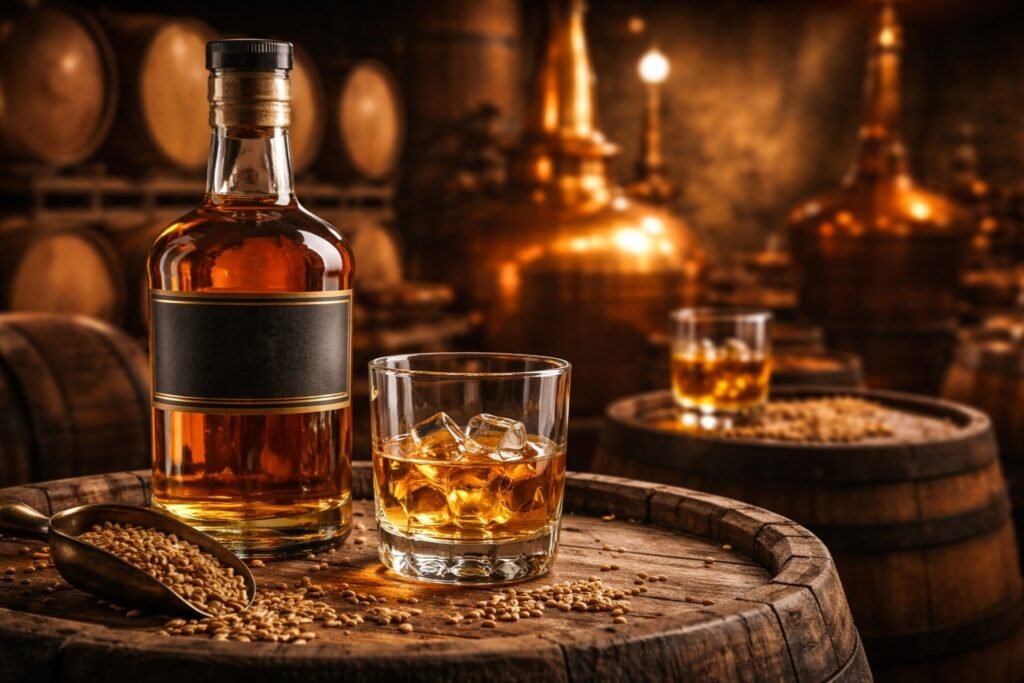
Neat means no ice, no water, no mixers. Just bourbon in a glass at room temperature.
This is the purest way to drink it because nothing gets between you and the spirit. You taste everything the distiller intended: the sweetness from the corn, the char from the barrel, the spice from the rye or wheat.
The downside? The alcohol burn can dominate, especially on higher-proof bottles. Your palate needs a minute to adjust. Some people love this intensity. Others find it overwhelming.
If you’re going neat, use a rocks glass for casual drinking or a Glencairn glass if you want to focus on aroma. The Glencairn has a tulip shape that funnels scents toward your nose, making it easier to pick up vanilla, caramel, and oak notes before you even sip.
Neat works best when you’re genuinely curious about the bourbon itself and you’re not in a rush.
Pour bourbon over ice and you’ve got it on the rocks. Simple, effective, incredibly popular.
Ice does two things: it chills the bourbon and dilutes it as it melts. Both changes make the drink smoother and easier to handle, especially if you’re dealing with a high-proof bottle or just prefer cold drinks.
The type of ice you use matters. One large cube melts slower than a handful of small ones, giving you more control over dilution. Small cubes melt fast, turning your bourbon into watery bourbon within minutes.
On the rocks shines in warm weather, with bolder bourbons that need taming, or when you’re drinking casually and don’t want to overthink it. It’s approachable, refreshing, and there’s zero pretension involved.
Adding water to bourbon isn’t about dilution for the sake of it. It’s about opening up the liquid.
Bourbon’s flavor compounds are largely oil-based. A few drops of water help separate those oils, releasing aromas and flavors that were locked down by the alcohol. You might suddenly notice fruit, spice, or oak that wasn’t obvious before.
The key word here is few. We’re talking a few drops, maybe a small splash. Not a pour. Not half a glass of water. Just enough to cut the heat without drowning the bourbon.
This method works especially well on overproof bourbons (anything above 100 proof). The alcohol intensity can mask subtlety, and water brings balance back.
Start with two or three drops. Taste. Add more if needed. You can always add water. You can’t take it back.
Bourbon isn’t just for sipping. It’s one of the most versatile cocktail bases out there, pairing beautifully with citrus, bitters, sweeteners, and herbs.
Three classics you should know:
Old Fashioned: Bourbon, sugar, bitters, and an orange peel. Simple, bold, timeless.
Manhattan: Bourbon (or rye), sweet vermouth, and bitters. Smooth, slightly sweet, with a bitter edge.
Whiskey Sour: Bourbon, lemon juice, simple syrup, and optional egg white for texture. Bright, tart, balanced.
For cocktails, skip the expensive bottles. A mid-tier bourbon with balanced flavors does the job perfectly. You want something with enough character to come through the other ingredients, but you’re not showcasing it the way you would neat.
Higher-proof bourbon (around 100) holds up better in cocktails because dilution from ice and mixers is part of the equation. A lower-proof bourbon can disappear.
Glassware affects your experience, but it’s not make-or-break.
A Glencairn glass or any tulip-shaped glass concentrates aromas, making it easier to smell and taste the bourbon’s full profile. This matters most when drinking neat or with a little water.
A rocks glass (also called a tumbler) works for everything: neat, on the rocks, casual sipping. It’s the workhorse of bourbon drinking.
If all you have is a regular glass, use it. The bourbon won’t know the difference, and neither will your palate after the first sip.
Tasting bourbon doesn’t require ceremony. Just a little attention.
Smell it first. Bring the glass to your nose and take a light sniff. Don’t inhale hard or you’ll just get alcohol burn. You’re looking for the top notes: vanilla, caramel, fruit, spice, oak.
Take a small sip. This is the orientation sip. Your palate isn’t ready for bourbon yet. Let it adjust.
Take a real sip. Hold it in your mouth for a second. Let it coat your tongue. Some people do a “Kentucky chew,” moving the bourbon around like food. It sounds silly, but it works. You’re warming the liquid and spreading it across your taste buds.
Swallow and notice the finish. Does the flavor linger? Does it fade fast? Is it sweet, spicy, dry, warm?
Bourbon tends to hit a few core flavor profiles:
Caramel and vanilla come from the charred oak barrels. Almost every bourbon has this to some degree.
Spice (cinnamon, pepper, clove) comes from the grain mix, especially if there’s rye in the mashbill.
Oak and wood show up as the bourbon ages. Older bourbons lean heavier into this.
Fruit can appear as apple, cherry, or dried fruit, depending on the distillation and barrel.
You don’t need to identify every note. Just pay attention to what you’re tasting. Over time, you’ll get better at naming it.
Not all bourbons work the same way in every situation.
For neat or on the rocks: Go with something in the 80 to 90 proof range if you’re new. It’s easier to drink and still flavorful. As you get comfortable, move up to 100 proof or higher.
For cocktails: Look for mid-tier bottles around 90 to 100 proof. You want flavor that can stand up to mixers, but you don’t need to spend premium money on something that’s getting shaken with lemon juice.
For experimenting with water: Higher-proof bottles (100+) benefit most from this method. The water brings them into balance without erasing character.
Buy a bottle, pour it a few different ways, and figure out what works. Bourbon’s flexible enough to meet you where you are.