
Get Fresh Cocktail Recipes in Your Inbox
Join our newsletter and receive exclusive cocktail recipes, tips & mixology secrets every week.
No spam, just good taste. Unsubscribe anytime.
 ByJames
No, you don’t need a cocktail shaker to make cocktails. But the real question is what you’re trying to make and how good you want it to taste. Some drinks benefit massively from proper shaking, while others work fine with simple stirring or smart kitchen hacks. The answer depends entirely on your drink and your standards.
Not all cocktails are created equal. Some genuinely need the mechanical action of shaking to work properly. Others don’t care one bit.
If your drink contains citrus juice, cream, egg whites, syrups, or multiple ingredients with different densities, shaking isn’t optional. It’s chemistry.
Think Margaritas, Daiquiris, Whiskey Sours, Cosmopolitans, or anything with fresh lime or lemon. These drinks rely on shaking to aerate the liquid, emulsify fats or proteins, chill everything rapidly, and integrate ingredients that would otherwise separate or sit awkwardly in layers.
Without proper shaking, a Margarita tastes flat and unbalanced. The citrus doesn’t marry with the tequila. The texture feels wrong. You’re essentially drinking ingredients next to each other instead of a unified cocktail.
Spirit-forward drinks like Martinis, Manhattans, Negronis, and Old Fashioneds are stirred, not shaken. Some are built directly in the glass.
These cocktails contain only alcoholic ingredients or minimal additions like bitters. Shaking them introduces unwanted aeration and over-dilution. You lose the silky, clear texture that defines a proper stirred drink. James Bond might have popularized the shaken Martini, but most bartenders will tell you it’s technically wrong.
If your cocktail recipe says “stir,” believe it.
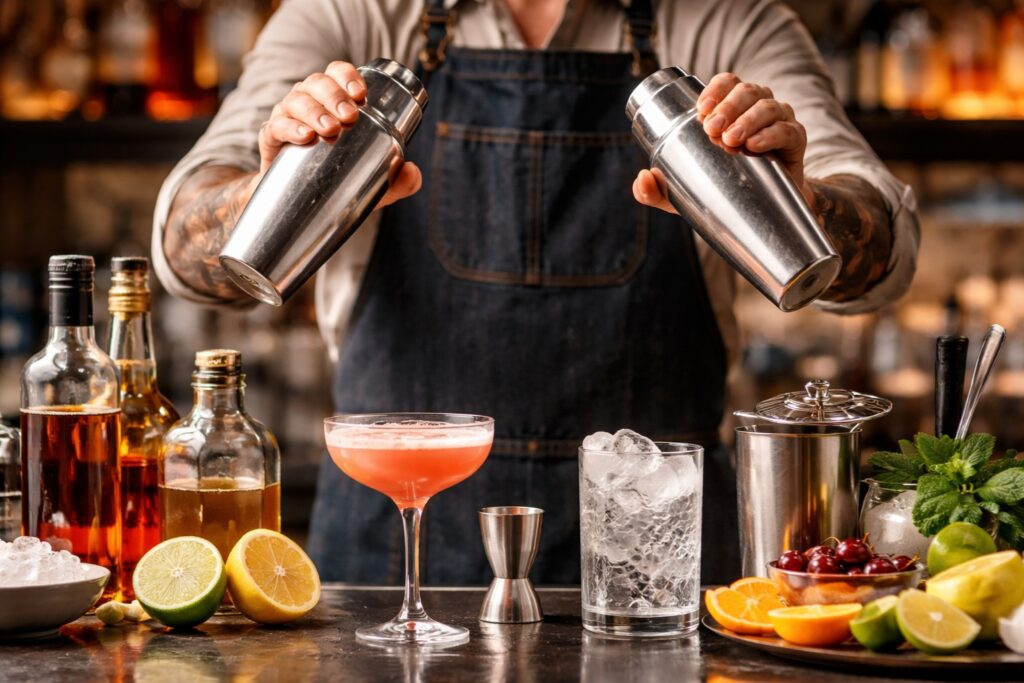
Shaking a cocktail does four critical things, and none of them are about looking cool behind the bar.
First, rapid chilling. When you shake, ice chips break off and slam against liquid repeatedly. This drops the temperature faster than any other method. Cold matters more than most people realize. A lukewarm Daiquiri is borderline undrinkable.
Second, aeration. Shaking introduces tiny air bubbles into the liquid. This creates a lighter, frothier texture, especially noticeable in drinks with citrus or egg whites. That’s why a freshly shaken sour has a foamy cap on top.
Third, controlled dilution. Yes, dilution is intentional. Ice water softens harsh spirits, rounds out acidity, and brings the drink to proper drinking strength. Too little dilution and your cocktail tastes like rocket fuel. Too much and it’s weak.
Fourth, emulsification. Ingredients like cream, egg whites, or thick syrups don’t mix on their own. Shaking forces them to integrate at a molecular level. Without it, you get separation and an unpleasant mouthfeel.
Bottom line: shaking is functional, not decorative.
If you don’t own a shaker, you can still make excellent cocktails. You just need something that seals tight and gives the ice room to move.
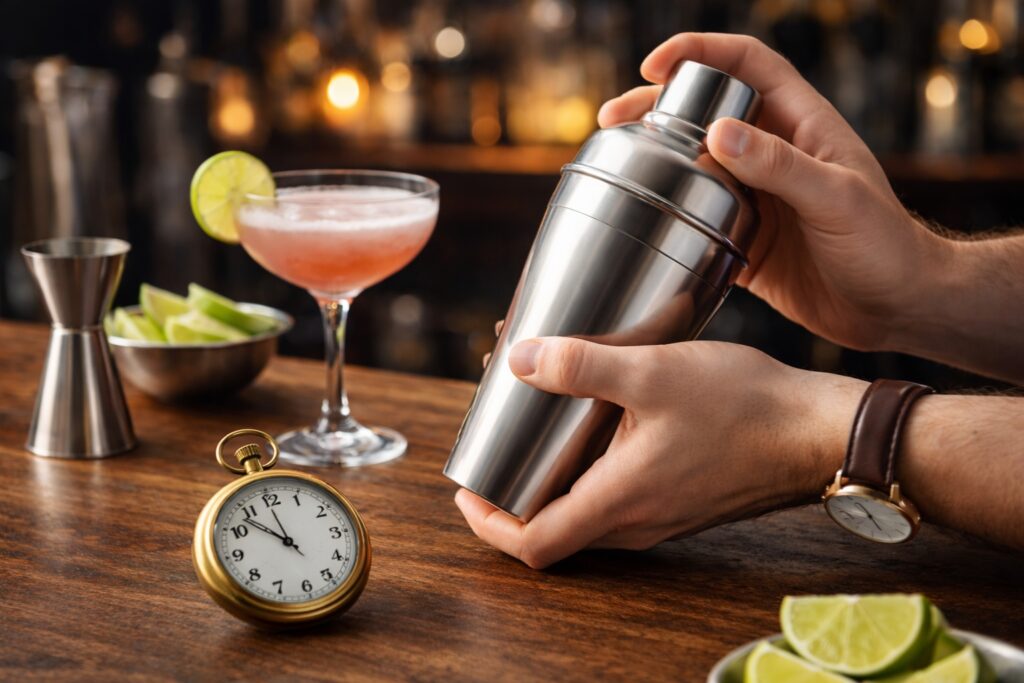
A 16 to 24 oz mason jar works exactly like a cocktail shaker. Add your ingredients, fill three-quarters with ice, screw on the lid, and shake hard for 10 to 15 seconds.
The glass lets you see what you’re doing. The metal lid and ring create a watertight seal. And you can strain by offsetting the flat lid slightly while holding back the ice, or by punching holes in a spare lid to create a permanent strainer.
This isn’t a hack. This is a legitimate technique that works as well as any $20 cobbler shaker.
A spill-proof travel mug or sturdy water bottle does the job for single servings. Add ice and ingredients, seal the lid, and shake. Hold your thumb over any sipper slot to prevent leaks.
It’s less elegant than a mason jar, but it’s reliable and you probably already own one. Function over form.
Before modern shakers existed, bartenders poured liquid back and forth between two containers to chill and aerate drinks. It works, but it requires steady hands and some practice.
This method is slow and has a higher risk of spills. Only use it if you have no better option.
Avoid thin glassware that can shatter under pressure. Skip containers without secure lids unless you enjoy wearing your cocktail. And don’t use anything so small that ice can’t move freely. A cramped shake is a bad shake.
If your recipe calls for stirring, don’t overthink it. You don’t need specialized equipment.
Grab a bar spoon or regular spoon and a mixing glass, pint glass, or any sturdy vessel. Add ice, pour in your ingredients, and stir gently for 20 to 30 seconds. The ice should rotate smoothly without clinking loudly. Strain into your serving glass.
Stirred drinks are meant to be crystal clear and silky smooth. Shaking ruins that. A proper Manhattan should look like polished amber, not cloudy.
Examples where stirring beats shaking every time: Martini, Manhattan, Negroni, Boulevardier, Sazerac, Old Fashioned (though this one is typically built in the glass).
Here’s the honest assessment.
If you make cocktails once a week or more, a shaker is worth the $15 to $25. It’s faster, cleaner, and more consistent than workarounds. You’ll use it enough to justify the drawer space.
If you regularly make shaken drinks like Margaritas, Daiquiris, or Whiskey Sours, absolutely buy one. The improvement in texture and temperature control is immediate and noticeable.
If you only make stirred drinks or simple highballs (gin and tonic, rum and Coke), don’t bother. A bar spoon and a pint glass handle everything you need.
For beginners, start with a three-piece cobbler shaker. It has a built-in strainer, requires no technique to seal, and feels intuitive. You can find one at any kitchen store or online for under $20.
For anyone serious about cocktails, eventually upgrade to a Boston shaker (two tins or tin and glass). It’s more versatile, easier to clean, and holds more volume for batch drinks. You’ll need a separate Hawthorne strainer, but the control and efficiency are worth it.
A shaker makes the job easier and more consistent, but it’s not a dealbreaker. The best cocktail is the one you actually make, whether that’s with a $20 Boston shaker or a mason jar from your pantry. Focus on technique, fresh ingredients, and proper measurements first. The tools can come later.