
Get Fresh Cocktail Recipes in Your Inbox
Join our newsletter and receive exclusive cocktail recipes, tips & mixology secrets every week.
No spam, just good taste. Unsubscribe anytime.
 ByJames
Yes, coupe glasses work perfectly well for martinis. In fact, many top cocktail bars now prefer them over the traditional V-shaped martini glass. Both are stemmed glasses designed for chilled, ice-free cocktails, and both hold similar volumes. The choice between them comes down to presentation style, practicality, and how you like your drink delivered to your lips.
A martini needs just two things from its glassware: a stem to keep warm hands away from the drink, and enough capacity to hold 3 to 5 ounces of liquid. The coupe glass checks both boxes.
Originally designed for champagne in the 17th century, the coupe has become the go-to glass for craft bartenders serving spirit-forward cocktails. Its rounded, shallow bowl keeps drinks properly chilled while maintaining the elegant, sophisticated look that a martini deserves.
The martini glass, with its iconic V-shape, appeared much later in 1925. While it became synonymous with the drink itself (thanks largely to James Bond), it’s never been the only option. Both glasses serve the same fundamental purpose, and switching between them won’t ruin your drink.
The coupe has a rounded bowl with gently curved walls that rise up from the stem. This shape naturally contains the liquid, even when the glass is bumped or carried across a room.
The martini glass features steep, angular walls that form a perfect V. That dramatic shape looks striking, but it’s also a recipe for spills. The straight sides offer no resistance to sloshing liquid. One nudge at a crowded bar and you’re wearing your drink.
If you’ve ever watched a server navigate a busy restaurant with a tray of martini glasses, you’ve seen the problem. The coupe’s curved walls keep the drink where it belongs.
How a glass delivers liquid to your mouth matters more than most people realize.
The martini glass tips easily. A slight angle sends the drink flowing quickly thanks to those straight sides. Some drinkers love this immediate delivery. Others find it too fast, almost aggressive.
The coupe’s rounded shape creates a gentler pour. You control the flow more naturally, and the curved rim feels softer against your lips.
As for aroma, both glasses open wide enough to let you smell the botanicals in your gin or the vermouth’s herbal notes. The coupe’s slight inward curve at the rim might concentrate aromas a touch more, but in practical terms, the difference is minimal. Your martini will smell and taste excellent in either glass.
The coupe makes sense in several situations where practicality matters as much as style.
Serving guests at home: Unless you’re running a sit-down dinner where drinks stay put, coupes dramatically reduce the risk of spills. People can walk, talk, and gesture with a coupe in hand without baptizing your carpet in gin.
Building a versatile bar: If you’re investing in one set of cocktail glasses, coupes work for everything from daiquiris to sidecars to manhattans. Martini glasses are really only good for martinis and a handful of similar drinks. The coupe gives you more range for your money.
Following modern bartending trends: Walk into any respected craft cocktail bar and you’ll likely see coupes behind the bar. The shift happened in the 2010s when bartenders moved away from the oversized, gimmicky martini glasses of the 1990s and returned to classic proportions and practical design.
Prioritizing comfort: Some drinkers simply find the coupe more comfortable to hold and drink from. The rounded shape feels natural, and there’s no sharp angle to navigate.
The V-shaped martini glass isn’t obsolete. It still excels in specific contexts.
Traditional presentation: If you’re a purist who loves the classic aesthetic, nothing beats the martini glass. It’s iconic for a reason. The sharp lines, the dramatic silhouette, the way it sits on a bar top announcing its contents without ambiguity. That visual language matters to some drinkers.
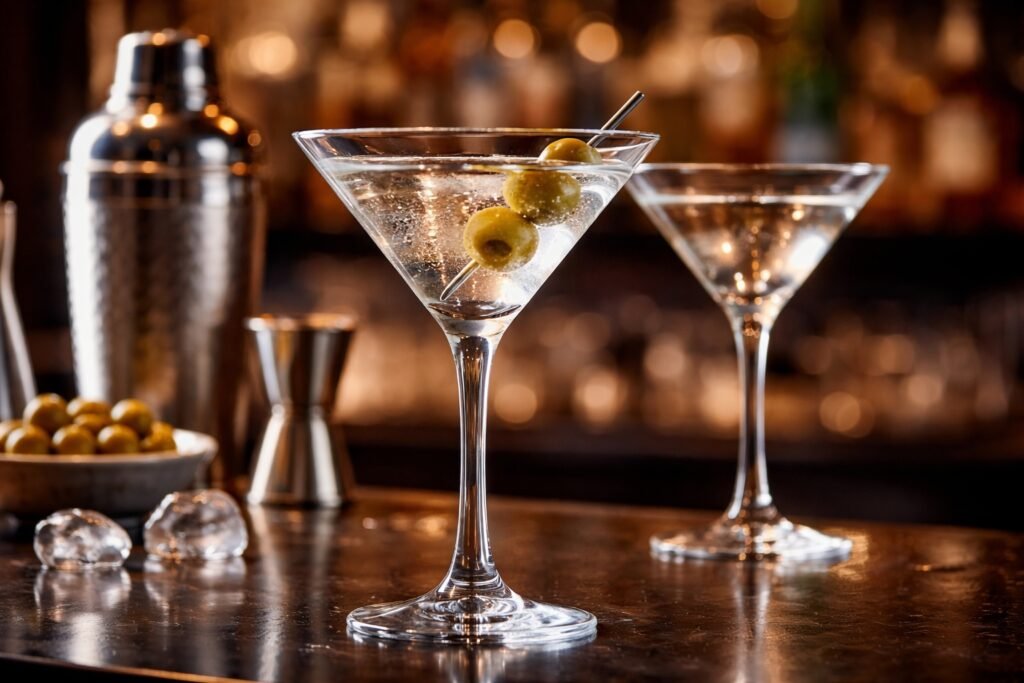
Showcasing crystal-clear spirits: The martini glass’s straight sides create an unobstructed view of the liquid. If you’re serving a perfectly clear, stirred martini and want to highlight that clarity, the V-shape does it better than any other glass.
Garnish display: The wide rim of a martini glass holds olives, cocktail onions, and lemon twists beautifully. The garnish becomes part of the presentation in a way that’s harder to achieve with a coupe.
The Bond factor: Sometimes you just want that specific vibe. If you’re mixing a vodka martini and channeling your inner spy, the martini glass delivers the right atmosphere.
The craft cocktail movement embraced the coupe because it solved real problems. During the cocktail renaissance of the 2000s and 2010s, bartenders wanted to distance themselves from the sugary, neon drinks served in oversized martini glasses during the previous decades.
The coupe represented a return to classic proportions and serious cocktails. Its stability made life easier for servers. Its versatility meant bars could stock fewer types of glassware.
Today, you’ll see both glasses in professional settings. Some high-end bars have brought back elegant, properly sized martini glasses as part of a neo-classic aesthetic. Others stick firmly with coupes. Many keep both on hand and let the bartender choose based on the specific drink and customer.
For home bartenders, the answer is simple: use what you have, or buy what appeals to you. Your martini will taste identical in either glass. The coupe offers more versatility and less cleanup after parties. The martini glass offers pure, undiluted tradition.
Both belong in the conversation. Neither is wrong.