
Get Fresh Cocktail Recipes in Your Inbox
Join our newsletter and receive exclusive cocktail recipes, tips & mixology secrets every week.
No spam, just good taste. Unsubscribe anytime.
 ByJames
You’re ready to make that Margarita. Recipe’s open, ingredients out, ice ready. Then you realize the jigger’s missing. Good news: your kitchen already has everything you need to measure cocktails accurately. Here’s how to pour precise drinks using tools you actually own.
Cocktails work on ratios, not recipes. A Daiquiri needs 2 parts rum, 1 part lime, and a half part sugar. Shift those numbers and you get something else entirely: too sweet, too boozy, or aggressively sour.
Precision matters most in spirit-forward drinks and sours where balance is everything. A Manhattan with an extra half ounce of vermouth tastes wet and cloying. A Margarita with too much Cointreau turns into liquid candy.
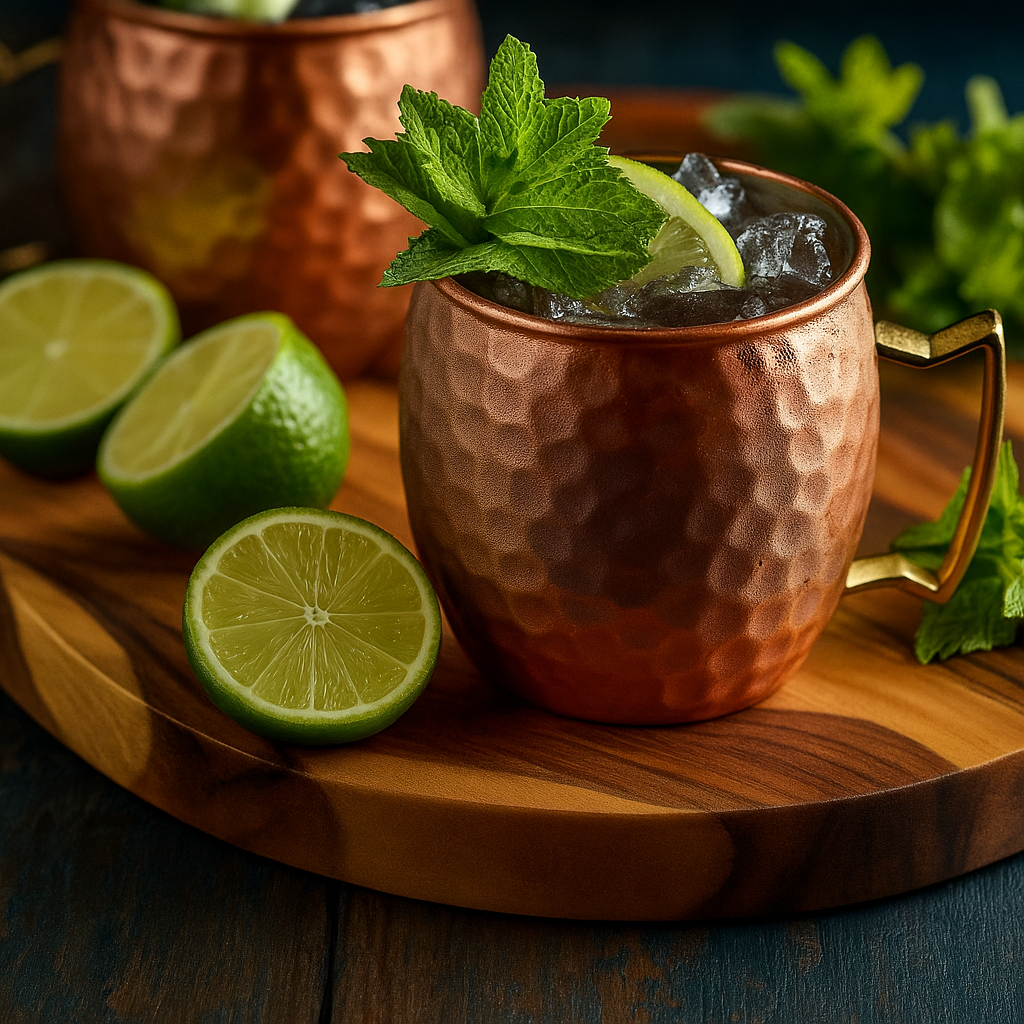
That said, highballs and long drinks forgive mistakes. Adding an extra half ounce of vodka to a Moscow Mule won’t ruin your night. Know when to care and when to relax.
Here’s what you need to know, right now:
0.5 oz = 1 tablespoon
0.75 oz = 1.5 tablespoons
1 oz = 2 tablespoons
1.5 oz = 3 tablespoons (standard shot)
2 oz = 4 tablespoons or 1/4 cup
1 teaspoon = 1/6 oz (useful for bitters, syrups)
Bookmark this section. You’ll come back to it.
The humble tablespoon is your best friend. One tablespoon equals exactly 0.5 ounces. Two tablespoons make an ounce. Three tablespoons give you a standard 1.5 oz pour.
When measuring spirits, level off the spoon like you’re baking. Let surface tension create a slight dome, but don’t heap it. For syrups and liqueurs, a level pour works fine since viscosity varies.
Teaspoons handle the small stuff. One teaspoon equals 1/6 oz, perfect for measuring bitters (a barspoon is essentially a teaspoon), orgeat, or absinthe in cocktails that need just a touch.
Use measuring spoons for precision drinks: Negronis, Manhattans, Daiquiris, Margaritas, or anything where the ratio defines the drink. They’re small, easy to clean, and already in your drawer.
Most shot glasses hold 1.5 oz, but not all. The one collecting dust in your cabinet might be 1 oz, 2 oz, or something random your friend brought back from Cancún.
Test it once. Fill your shot glass with water, then pour it into a measuring cup or count out tablespoons. Write the measurement on a piece of tape stuck to the bottom. Now you know.
Shot glasses work great for spirit-forward drinks where you’re pouring 1.5 or 2 oz of a base spirit. They’re less useful when a recipe calls for 0.75 oz or other fractional amounts.
One quarter cup equals 2 ounces. If you’re making a large format cocktail, batching drinks for a party, or mixing a pitcher of Negronis, the measuring cup is your tool.
For single cocktails, it’s overkill. Pouring 0.75 oz into a cup marked in quarter-cup increments requires guesswork. Save it for volume work or as a verification tool when calibrating other methods.
A standard coffee scoop typically holds 2 tablespoons, which equals 1 oz. Like the shot glass, yours might vary. Test it against a measuring spoon to confirm.
Coffee scoops work well as a backup measuring tool when you need round numbers: 1 oz, 2 oz, 3 oz. They’re less practical for the 0.75 oz or 1.5 oz measurements that cocktail recipes love.
Bartenders free pour by counting. It looks effortless, but it’s calibrated muscle memory. The classic system: one count equals roughly 0.25 oz.
Count to 2, you’ve poured 0.5 oz. Count to 4, that’s 1 oz. Count to 6, you’re at 1.5 oz. The trick is consistency, not speed.
Here’s how to calibrate your personal count. Grab a bottle, hold it like you’re pouring a drink (inverted, steady hand), and count “one one thousand, two one thousand, three one thousand, four one thousand” while liquid flows. Stop at four. Pour that into a measuring cup.
If you hit 1 oz, your count is accurate. If you’re at 1.5 oz, you’re counting too slow. If you only poured 0.75 oz, speed up. Adjust and practice until four counts reliably gives you 1 oz.
Practice with water, not expensive whiskey. Pour into different glasses. Use your right hand, then your left. Do it 20 times. Muscle memory builds fast.
Free pouring works for high-volume drinks and once you’ve made the same cocktail 50 times. It’s faster than measuring spoons and looks more confident.
Don’t free pour for sours, tiki drinks, or anything delicate. A Whiskey Sour needs exactly 0.75 oz of lemon juice and 0.5 oz of simple syrup. Eyeballing that invites disaster. Same goes for a Mai Tai with five ingredients in specific proportions.
Spirit-forward stirred drinks like Old Fashioneds and Manhattans forgive small variations. A free-poured 2.25 oz of bourbon instead of 2 oz won’t wreck the drink.
Pour spirits into a rocks glass until the liquid reaches one finger width from the bottom. That’s roughly 1 oz. Two fingers get you to 2 oz.
This only works in standard rocks glasses (the short, wide ones). Highball glasses, coupes, and Nick & Nora glasses have completely different geometries. Your finger width also matters, obviously.
Use this for casual pours when you’re drinking neat spirits or making a simple Whiskey Coke. Don’t use it for cocktails that need balance.
Red Solo Cups have embossed lines. The first line from the bottom (about an inch up) marks 1 oz. The second line sits around 5 oz.
It’s a party trick, not a precision tool. The lines help with batching jungle juice or keeping drinks roughly consistent when you’re making 20 Rum and Cokes. They don’t help with a proper Daiquiri.
Check your medicine cabinet. Those little plastic cups that come with cough syrup often have ml and oz markings. Oral syringes (the kind for children’s medicine) measure even more precisely.
30 ml equals 1 oz. If your medicine cup has ml markings, you can measure anything. These tools shine for syrups, bitters, and liqueurs where you need small, accurate amounts.
Wash them thoroughly first. Nobody wants their Martini tasting like cherry-flavored acetaminophen.
Pour-timing apps claim to measure ounces by timing your pour. You start the timer, pour, and stop when the app says you’ve hit your target.
The idea: liquid flows at a consistent rate from a given bottle. Time the pour, calculate the volume.
The problem: bottle shape, pour angle, liquid viscosity, and your grip all affect flow rate. Vodka pours faster than Campari. A full bottle pours differently than one that’s half empty.
Apps work if you calibrate them with your specific bottle and test repeatedly. At that point, you might as well use measuring spoons.
One ounce of water or most spirits weighs approximately 30 grams. If you have a digital scale, you can weigh instead of measure.
Place your mixing glass on the scale, tare it to zero, pour until you hit 60g for 2 oz. This works beautifully for batching cocktails or when you’re making multiple drinks with the same base.
It’s slower for single drinks and doesn’t help with carbonated ingredients (the bubbles throw off the weight). But for syrups, spirits, and juices, it’s legitimately accurate.
2 oz tequila = 4 tablespoons
1 oz lime juice = 2 tablespoons
0.75 oz Cointreau = 1.5 tablespoons
0.5 oz agave syrup = 1 tablespoon
Measure the tequila with four level tablespoons into your shaker. Add two tablespoons of fresh lime juice. Measure one tablespoon plus one and a half teaspoons of Cointreau (or just eyeball half of a second tablespoon). Add one tablespoon of agave.
The tablespoon method shines here because Margaritas live and die on balance. Too much Cointreau makes it cloying. Too much lime and it’s a punishment.
2 oz whiskey = 4 tablespoons (or one shot glass plus 2 tablespoons, if your shot is 1.5 oz)
0.25 oz simple syrup = 1.5 teaspoons (or a barspoon and a half)
2 dashes bitters
The Old Fashioned forgives imprecision. An extra quarter ounce of whiskey just makes it boozier. A little more syrup makes it rounder. As long as you’re in the ballpark, the drink works.
You could even free pour this once you know the recipe. The bitters and the dilution from stirring do more to define the drink than exact measurements.
2 oz white rum = 4 tablespoons
0.75 oz lime juice = 1.5 tablespoons
0.5 oz simple syrup = 1 tablespoon
A proper Daiquiri is the balance test for any measuring method. The ratio of spirit to citrus to sugar is tight. Add an extra half ounce of lime and it’s a face-puckering mess. Add too much syrup and you’ve made a snow cone.
Use measuring spoons. Don’t guess.
Pour at eye level. Tilt the measuring spoon, shot glass, or cup so you can see the liquid surface clearly. Meniscus (the curve at the top) should hit your target line.
Use a clear mixing glass when free pouring so you can see exactly how much you’ve poured. Adjust if you’re off.
Practice with water first. Before you waste good gin, pour water repeatedly until your muscle memory locks in. Test yourself with a measuring cup.
Mark your glasses with a permanent marker or a thin piece of tape at common measurements (1 oz, 1.5 oz, 2 oz). Pour once with measuring spoons, mark the level, and you’ve created a custom measuring tool.
Room temperature affects viscosity, but only barely. Cold Chartreuse pours slower than room-temp Chartreuse. It matters in professional bars pouring hundreds of drinks. At home, it’s noise.
Spirit-forward stirred drinks like Manhattans, Negronis, and Old Fashioneds tolerate variation. An extra quarter ounce of bourbon or vermouth shifts the flavor but doesn’t break the drink.
Highballs and long drinks barely notice measurement errors. A Gin and Tonic with 1.75 oz of gin instead of 1.5 oz tastes slightly stronger. That’s it.
Personal preference drinks change based on your palate anyway. Some people like their Margaritas tart. Others want them sweet. Measure the first one precisely, then adjust to taste.
After you’ve made the same recipe 20 times, you stop needing to measure. Your hand knows what 2 oz feels like. You recognize the right color when lime juice hits tequila. Trust builds with repetition.
A jigger makes bartending faster and more consistent. But the lack of one shouldn’t stop you from making a great drink. The best measuring tool is the one you’ll actually use, whether it’s a tablespoon, a shot glass, or a carefully calibrated four-count. Learn the ratios, find your method, and pour with confidence.